Apa yang anda cari?

Cleanroom HEPA filters are essential in modern laboratories and manufacturing facilities, where maintaining ultra-clean air is critical for product quality and process reliability. These filters efficiently capture airborne particles, including tiny contaminants that could compromise sensitive production processes, cause product defects, or trigger regulatory issues. By providing a controlled environment, cleanroom HEPA filters help facilities consistently meet strict cleanliness standards and ensure the integrity of products across pharmaceuticals, electronics, and biotechnology industries.
Many people ask what is HEPA filter or what does HEPA stand for. HEPA stands for High-Efficiency Particulate Air, and its purpose is to capture extremely small particles that ordinary filters cannot trap. A HEPA filter is essentially a dense web of randomly arranged fibers, made from materials such as borosilicate glass or synthetic polymers like polypropylene. The filter’s efficiency depends on fiber diameter, density, and the overall thickness of the media.
The physics behind particle capture is complex. Cleanroom HEPA filters rely on mechanisms such as interception, impaction, and diffusion to remove dust, microbes, chemical aerosols, and other contaminants from the airflow. These mechanisms work together to maintain cleanroom standards and protect sensitive processes, making HEPA filters indispensable in critical production and research environments.
The main function of any filter is to remove airborne particles. In cleanrooms, even minimal dust, bacteria, or mold can compromise industries like pharmaceuticals, biotechnology, and semiconductor manufacturing. Cleanroom HEPA filters reduce contamination risks, ensuring stable processes and high product quality.
Many industries must manufacture products in controlled environments to meet regulatory standards. Compliance with ISO 14644, cGMP/GMP, and USP 797/800 is often mandatory in healthcare, biotech, and pharmaceutical sectors. HEPA filtration ensures consistent air quality, helping facilities pass audits and maintain certifications. Understanding hepa meaning reinforces the importance of these systems in regulated environments.
HEPA filters also protect cleanroom personnel. In pharmaceutical compounding or chemical processing, workers may be exposed to hazardous particles. Filters trap these materials, preventing circulation in the workspace. This is a key part of USP 800 compliance, reducing occupational exposure and improving safety.
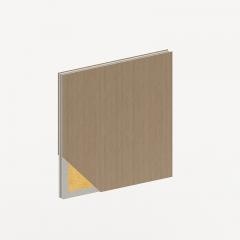
Different HEPA filter types suit varying applications and airflow requirements:
Wonclean specializes in designing and installing cleanroom HEPA filters customized for industry-specific needs, ensuring stable airflow, high filtration efficiency, and long-term operational reliability.
In conclusion, cleanroom HEPA filters are the cornerstone of air quality management in controlled environments. By effectively removing airborne particles, these filters safeguard product integrity, maintain high process standards, and support regulatory compliance. Understanding what is HEPA filter and what does HEPA stand for highlights the importance of this technology in modern manufacturing. For industries such as pharmaceuticals, electronics, and biotechnology, cleanroom HEPA filters are not optional—they are a vital component of operational safety, product quality assurance, and contamination control.

 Room JT30151, Building 4, Area B, No. 925 Yecheng Road, Industrial Zone, Shanghai,China
 info@wonclean.com
Allen@wonclean.com
Joy@wonclean.com
info@wonclean.com
Allen@wonclean.com
Joy@wonclean.com
 +8613671979988(Allen)+8615950938878(Joy)


 perkhidmatan dalam talian

